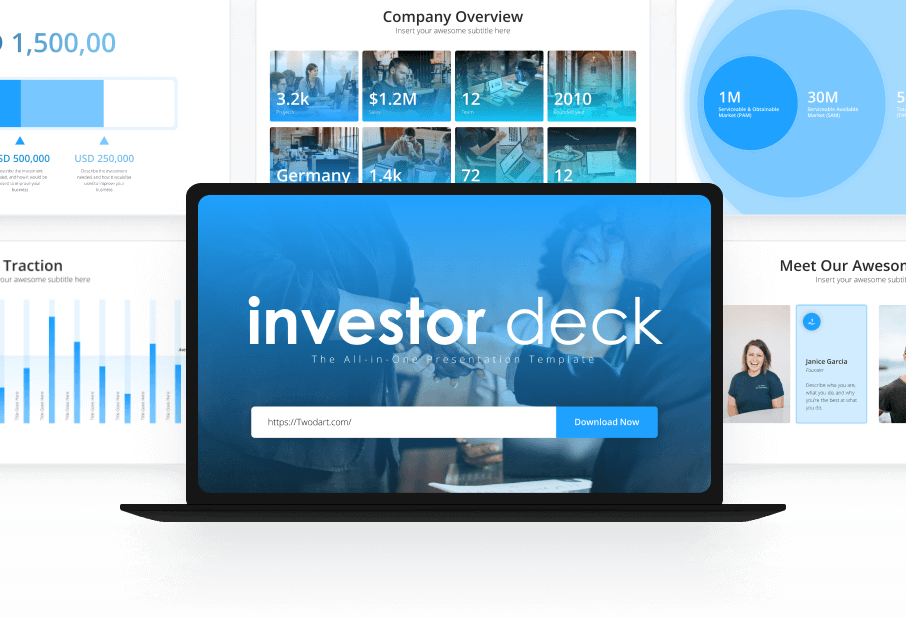
Investors don't fund ideas — they fund clarity, traction, and potential.
A strong investor pack isn't just about pretty slides. It’s about communicating a clear vision, demonstrating business viability, and inspiring trust. This toolkit is designed to help independent restaurateurs and emerging brands create investor materials that are professional, compelling, and tailored to the hospitality world.
WHAT IS AN INVESTOR PACK?
Start with the basics. Before building your materials, it's essential to understand what an investor pack is — and what investors expect to see inside.
An investor pack (or pitch deck) is a document or slide presentation used to raise funds, whether from angel investors, venture capital, family offices, or strategic partners.
It typically includes:
In the hospitality space, visual storytelling and operational clarity matter just as much as numbers.
SECTION 2: SLIDE-BY-SLIDE PITCH DECK STRUCTURE
Now that you know what an investor pack is, here’s a proven structure to help you build a clear and concise pitch deck that speaks to hospitality investors.
Use this structure to create a clear, focused deck:
Optional: Competitive landscape, exit strategy, sustainability impact
HOSPITALITY INVESTOR EXPECTATIONS
Investors who back restaurants and food brands are often more risk-aware than those in tech or retail. This section outlines what hospitality-specific investors are looking for, so you can align your pitch accordingly.
Hospitality investors think differently than tech VCs. They look for:
Your deck should speak their language: grounded, realistic, and brand-driven.
WHAT TO PREP BEFORE SENDING A DECK
Sending your investor pack isn’t the final step — it’s the beginning of due diligence. This section outlines the essential documents and best practices to be fully prepared when the conversation deepens.
Before you pitch, make sure you’re ready for due diligence:
Documents to have ready:
Tips:
SECTION 5: INVESTOR Q&A PREP
Investors ask tough, practical questions. Preparing for Q&A shows you’re serious and ready for partnership. This section highlights the most common questions and how to handle them.
Expect questions like:
Bonus tip: If you don’t know an answer, say “I’ll follow up with data.” Confidence doesn’t require bluffing.
CLOSING THOUGHTS
Investors back teams, clarity, and scalable ideas — not just concepts. Your investor pack is the starting point for that conversation. Make it clean, confident, and grounded in your brand’s story.
Future Bites: helping restaurant founders raise smart capital.
Julia Chesnokova
A strong investor pack isn't just about pretty slides. It’s about communicating a clear vision, demonstrating business viability, and inspiring trust. This toolkit is designed to help independent restaurateurs and emerging brands create investor materials that are professional, compelling, and tailored to the hospitality world.
WHAT IS AN INVESTOR PACK?
Start with the basics. Before building your materials, it's essential to understand what an investor pack is — and what investors expect to see inside.
An investor pack (or pitch deck) is a document or slide presentation used to raise funds, whether from angel investors, venture capital, family offices, or strategic partners.
It typically includes:
- Your concept and brand story
- Business model and traction
- Financials and projections
- Expansion plans
- Team background
- Investment offer (how much you’re raising and how funds will be used)
In the hospitality space, visual storytelling and operational clarity matter just as much as numbers.
SECTION 2: SLIDE-BY-SLIDE PITCH DECK STRUCTURE
Now that you know what an investor pack is, here’s a proven structure to help you build a clear and concise pitch deck that speaks to hospitality investors.
Use this structure to create a clear, focused deck:
- Cover Slide – Logo, tagline, contact details
- Problem & Opportunity – What market need are you solving?
- Your Concept – What makes your venue or brand special?
- Business Model – Revenue streams, pricing, cost structure
- Traction – Sales, locations, press, reviews, social proof
- Customer Profile – Who are your guests, and why do they come back?
- Operations Snapshot – How do you run efficiently?
- Growth Plan – Where are you expanding, and how?
- Financials – Current performance + 3-year projections
- The Team – Who's behind the brand, and why it matters
- The Ask – How much are you raising, at what valuation, and what for?
Optional: Competitive landscape, exit strategy, sustainability impact
HOSPITALITY INVESTOR EXPECTATIONS
Investors who back restaurants and food brands are often more risk-aware than those in tech or retail. This section outlines what hospitality-specific investors are looking for, so you can align your pitch accordingly.
Hospitality investors think differently than tech VCs. They look for:
- Operational proof – One successful unit is better than ten ideas
- Unit economics – Profit per location, labour ratios, rent thresholds
- Scalability – Can the concept work in other locations, cities, or countries?
- Management team – Is the founder operationally competent and vision-driven?
- Exit potential – What’s the investor’s return path?
Your deck should speak their language: grounded, realistic, and brand-driven.
WHAT TO PREP BEFORE SENDING A DECK
Sending your investor pack isn’t the final step — it’s the beginning of due diligence. This section outlines the essential documents and best practices to be fully prepared when the conversation deepens.
Before you pitch, make sure you’re ready for due diligence:
Documents to have ready:
- Latest P&L statement (past 12–18 months)
- Photos and branding elements
- Location performance breakdown (if multi-unit)
- Preliminary expansion budget
- Legal structure summary
Tips:
- Keep the deck short (10–15 slides max)
- Use visuals — food, interiors, guests — to bring it to life
- Avoid inflated language and unrealistic projections
SECTION 5: INVESTOR Q&A PREP
Investors ask tough, practical questions. Preparing for Q&A shows you’re serious and ready for partnership. This section highlights the most common questions and how to handle them.
Expect questions like:
- What’s your cost of goods and labour as a % of sales?
- What’s your break-even per site?
- What do guests spend per head on average?
- What’s your timeline for opening new locations?
- How will this investment improve margins or accelerate growth?
Bonus tip: If you don’t know an answer, say “I’ll follow up with data.” Confidence doesn’t require bluffing.
CLOSING THOUGHTS
Investors back teams, clarity, and scalable ideas — not just concepts. Your investor pack is the starting point for that conversation. Make it clean, confident, and grounded in your brand’s story.
Future Bites: helping restaurant founders raise smart capital.
Julia Chesnokova